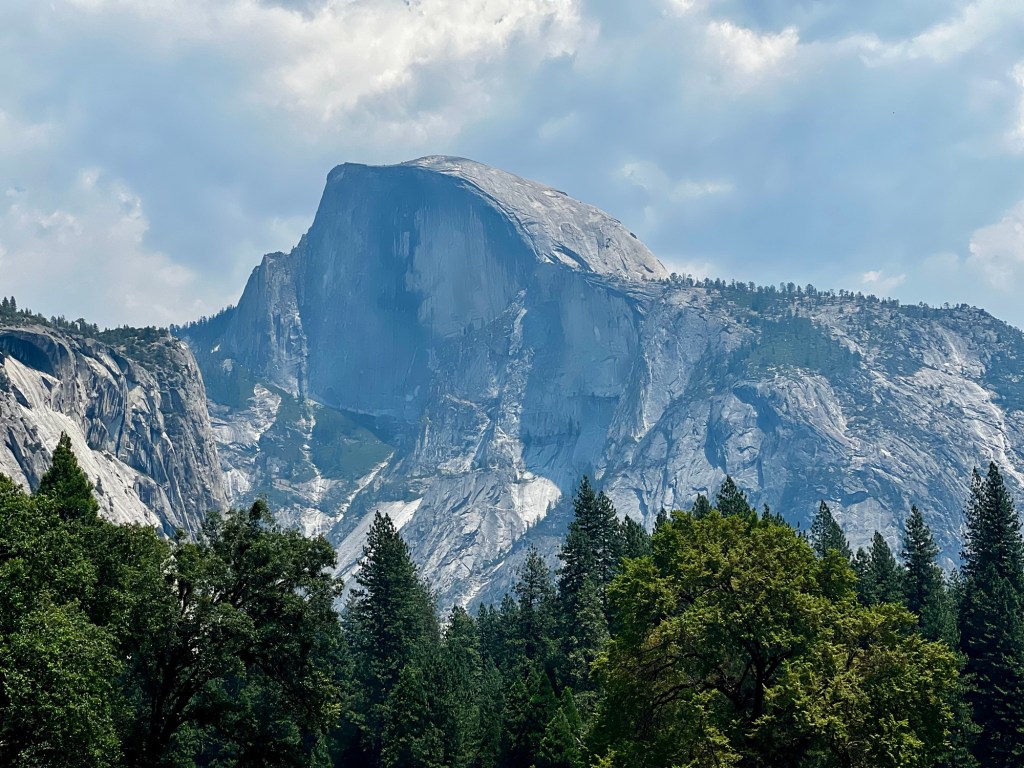
Disclaimer: This post is simply a recap of my personal experience hiking Half Dome. Conditions can vary year to year, and this is not meant to serve as official guidance. Please do your own research, check with the park service, and hike at your own risk. I am not liable for any injuries, changes in trail conditions, or decisions made based on this post.
Planning and permit season for all the big trips is quickly approaching, and one of the most sought-after hikes is Half Dome in Yosemite National Park. We backpacked Half Dome as a 3-day / 2-night trip in July 2024 and had the most amazing time. Yosemite is easily one of the most spectacular places I’ve ever been. That said, Half Dome is not for the faint of heart—it is a demanding hike and requires careful preparation and thoughtful risk assessment.
Planning
The Half Dome hiking season typically runs from Memorial Day to Columbus Day, depending on conditions. During this time, the famous cables are installed, allowing hikers to safely navigate the final ascent to the summit. Due to the extreme popularity of this hike, a permit is required to hike beyond the Sub Dome, and only 225 permits are issued per day.
There are two ways to secure a permit for Half Dome:
- Pre-season lottery — open through the month of March, with results announced in April
- Daily lotteries — apply two days in advance of your desired hiking date
If you plan to stay overnight, you’ll also need a separate backcountry permit for your desired camping location. Most hikers stay in Little Yosemite Valley the night before summiting Half Dome, but there are several other backcountry sites along the route.
We weren’t selected in the pre-season lottery, so once we finalized our dates, we entered the daily lottery. Thankfully, we scored two nights in Little Yosemite Valley (starting at Happy Isles) along with three Half Dome permits. After arriving, we checked in at the ranger station to go over our plan, picked up our permits, and checked out a bear canister. From there, we drove into Yosemite Valley and parked at the trailhead lot near the start of the Happy Isles Art and Nature Center.
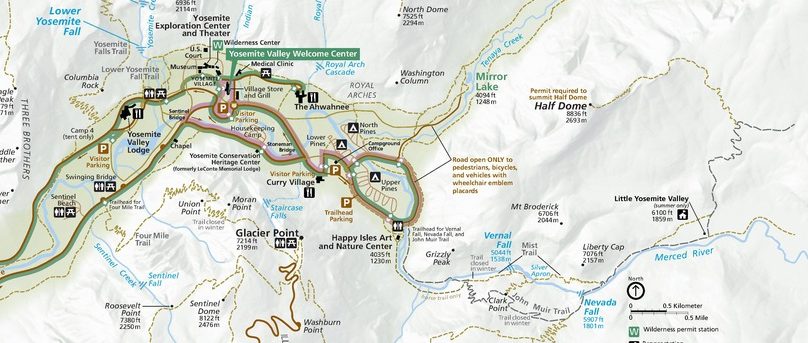
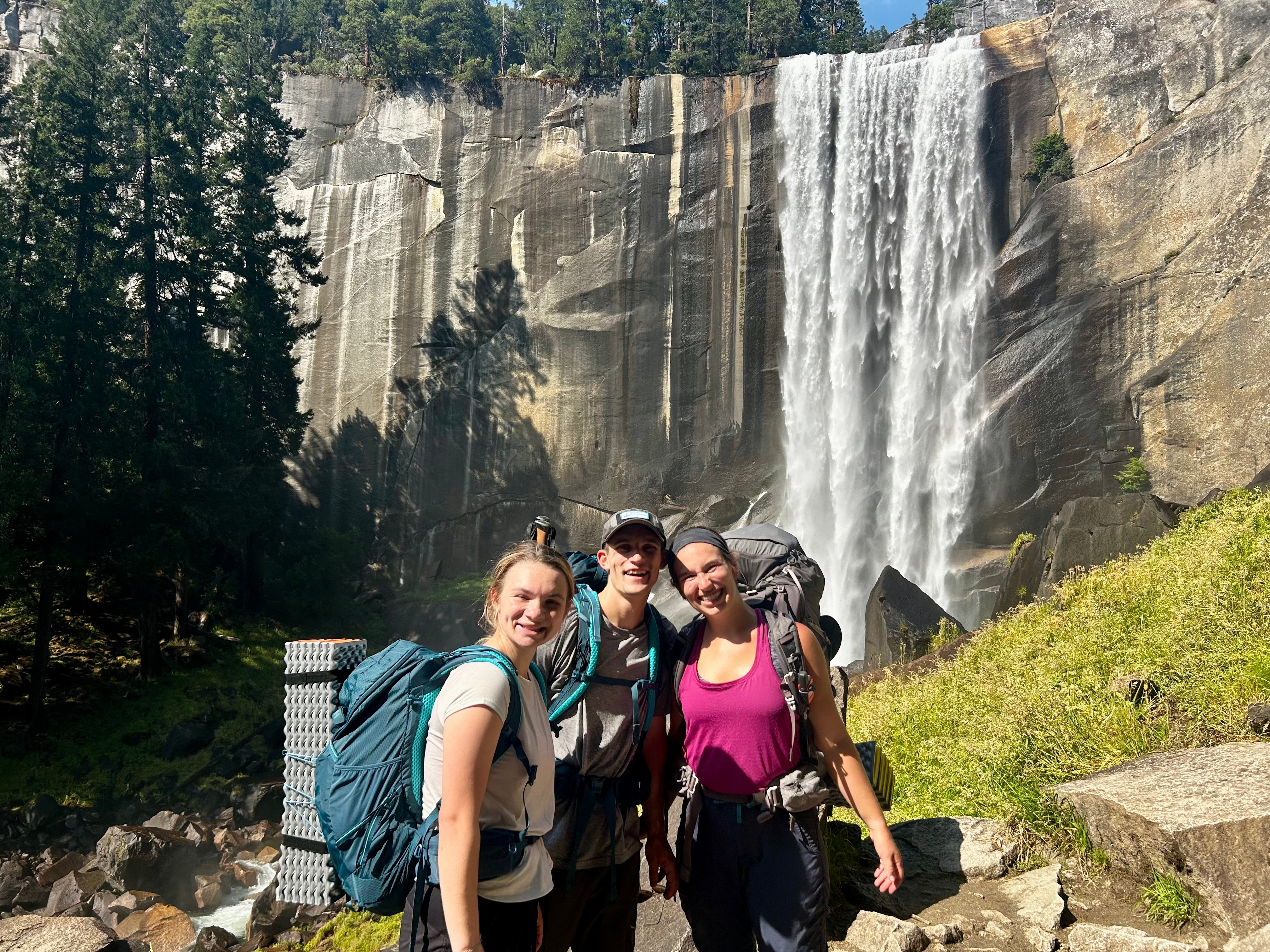
Our plan was to go up the Mist Trail past Vernal and Nevada Fall to Little Yosemite Valley. This route is about 8 miles with 2,300 ft of elevation gain. We made camp at Little Yosemite Valley, where we stayed for two nights. We ate dinner and went to bed early. We had talked with others at camp and wanted to start early for sunrise Yosemite views, avoid the heat of the day, and to beat the crowds on the cables. This meant leaving camp at 3:00 am, and the beginning of the hike was very dark—headlamps were a must. In the morning, be careful about shining your headlamp in other campers’ tents; try switching to a red light to decrease luminosity.
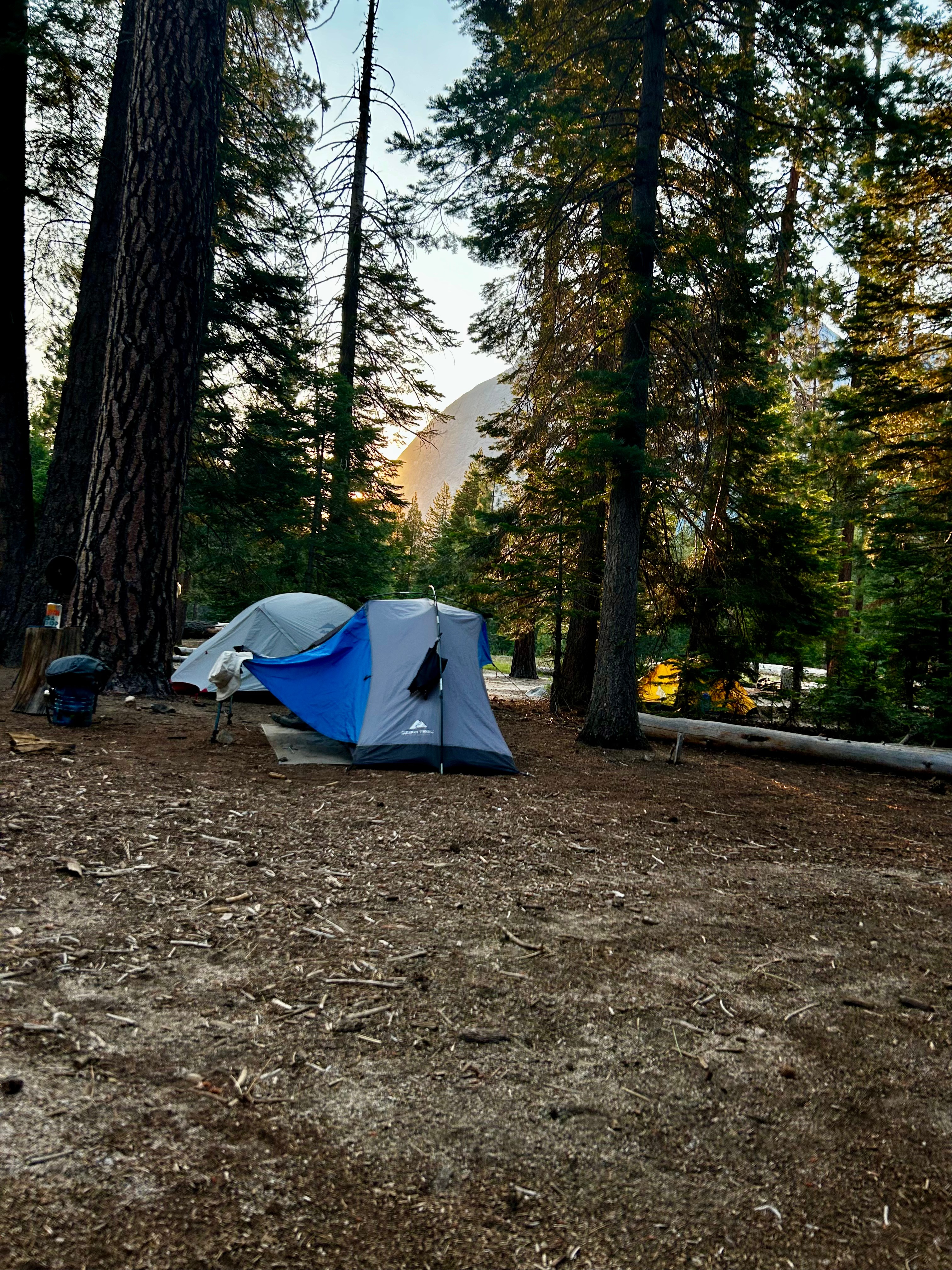
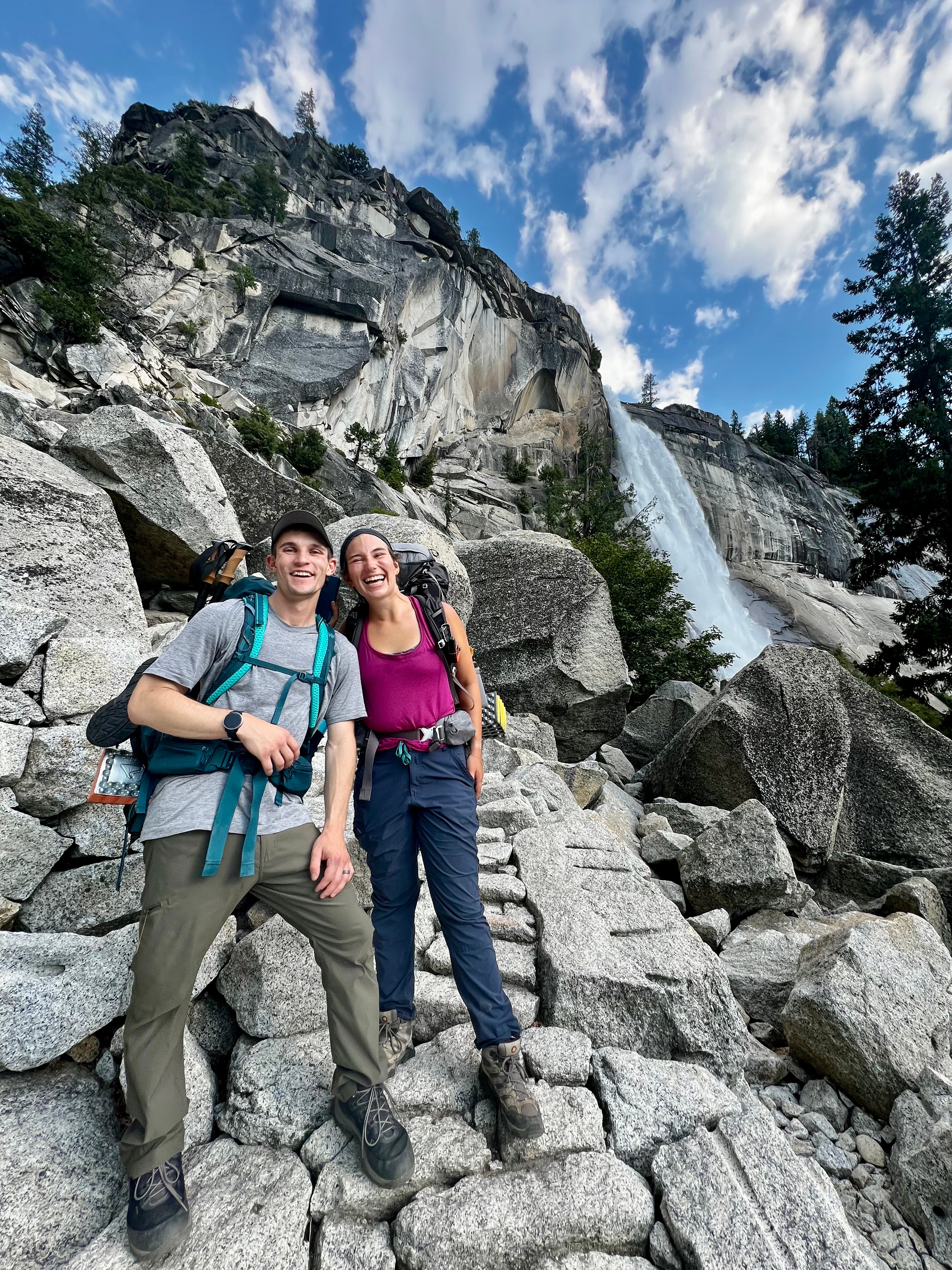
We made it up to the sub dome around 5:45 am, and by this point the sun had risen. We were treated to incredible colors as we started getting views of Half Dome and the surrounding valley. We took a break and then began the infamous cables.
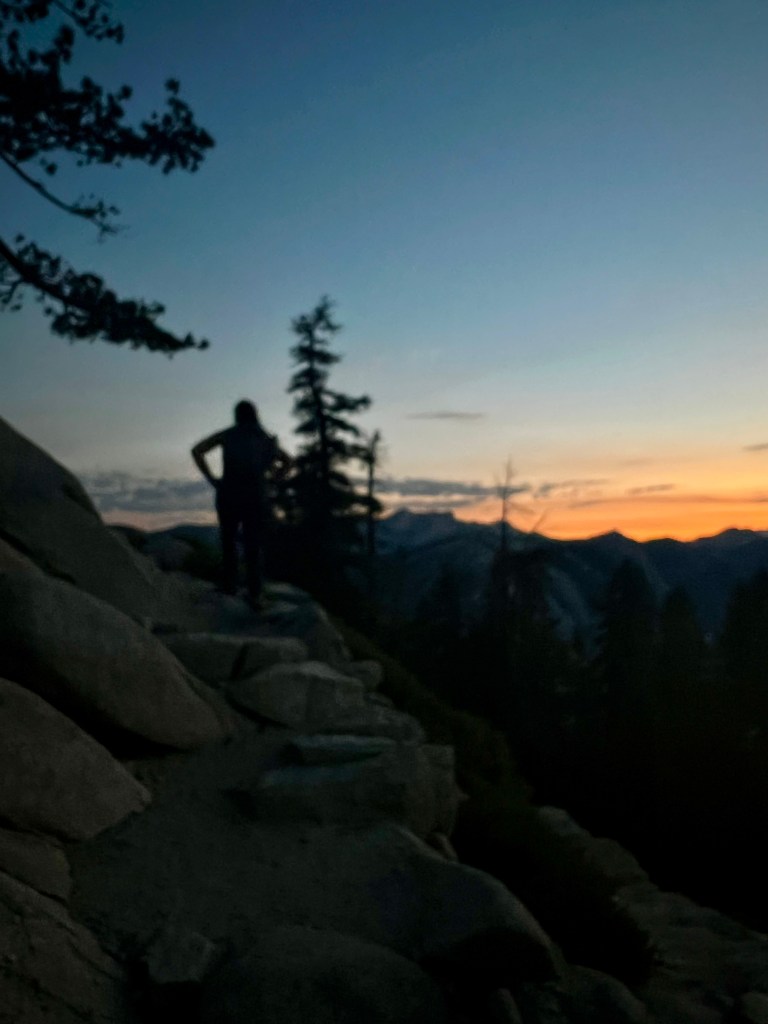
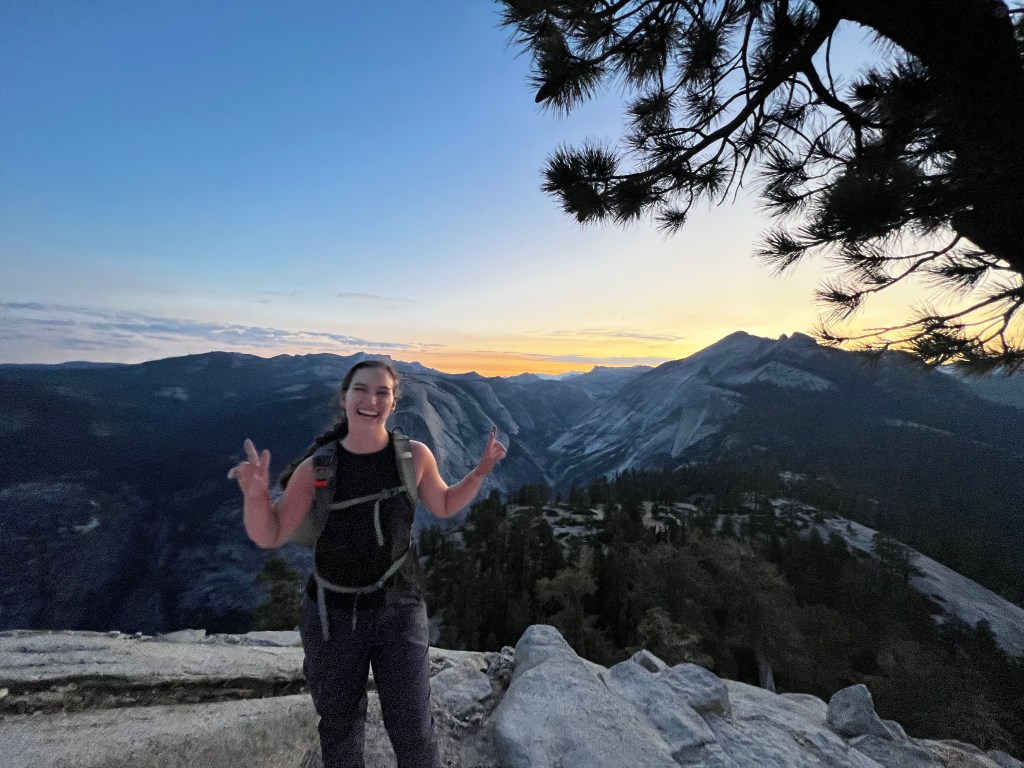
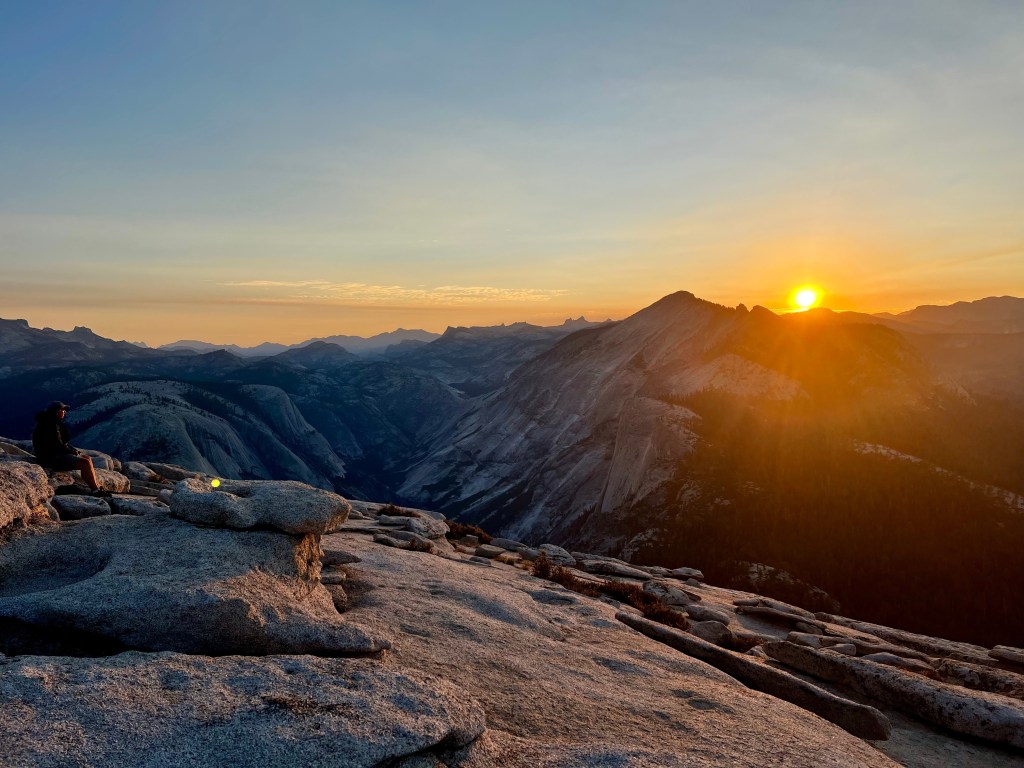
We opted not to bring harnesses or clips for the cables. We decided the extra weight wasn’t worth it and Half Dome should not be climbed in any sort of inclement weather– even with clipping in. There are many posts that would require a LOT of clipping and unclipping which would significantly delay the climb. We did, however, bring work gloves, and I’d definitely recommend this. My husband had heavier-duty gloves, while I wore light, inexpensive gardening gloves and was totally fine. They provided excellent grip and protection from the rough cables without being too hot or sweaty.


My favorite part about summiting Half Dome wasn’t necessarily the views—it was the feat. Half Dome is such a classic Yosemite icon, and being on top of it was absolutely majestic. We made it down around 7:45 am, just as the crowds on the cables were starting to pick up. I was incredibly thankful we started early and would prioritize an early wake-up again next time.
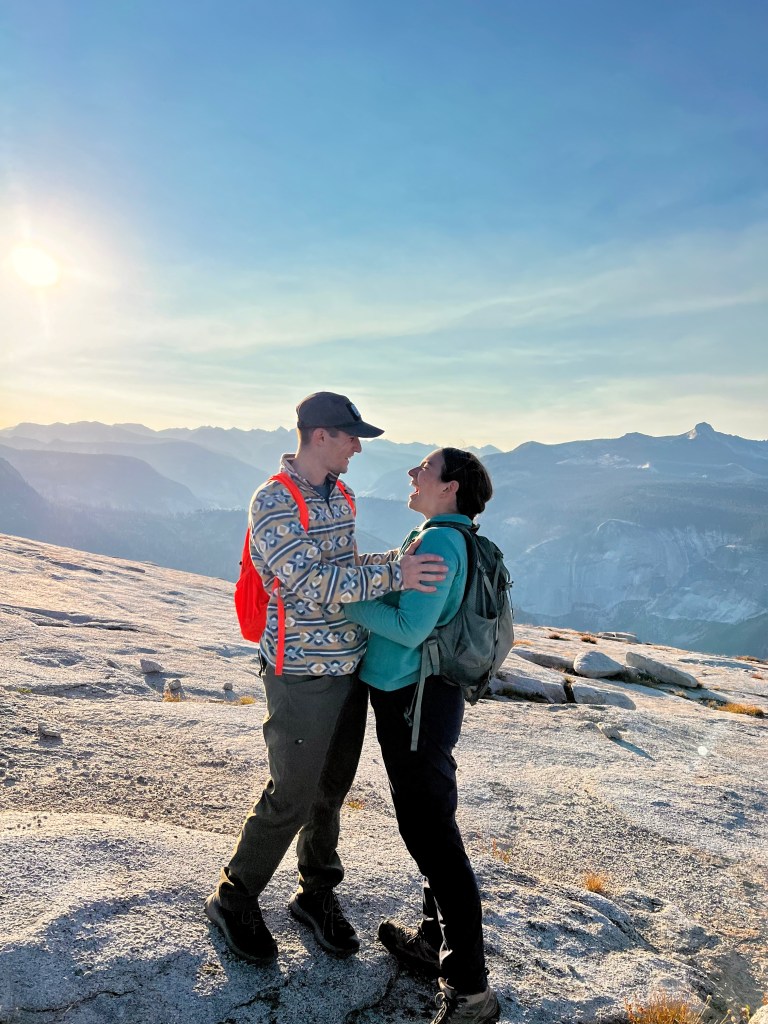
We made it back to camp at Little Yosemite Valley by 10:00 am and were wiped. We napped and then spent the rest of the day wading in the river nearby. It was so fun seeing everyone hanging out at the “beach” after their hikes. We took a few easy walks around camp and simply enjoyed the day.
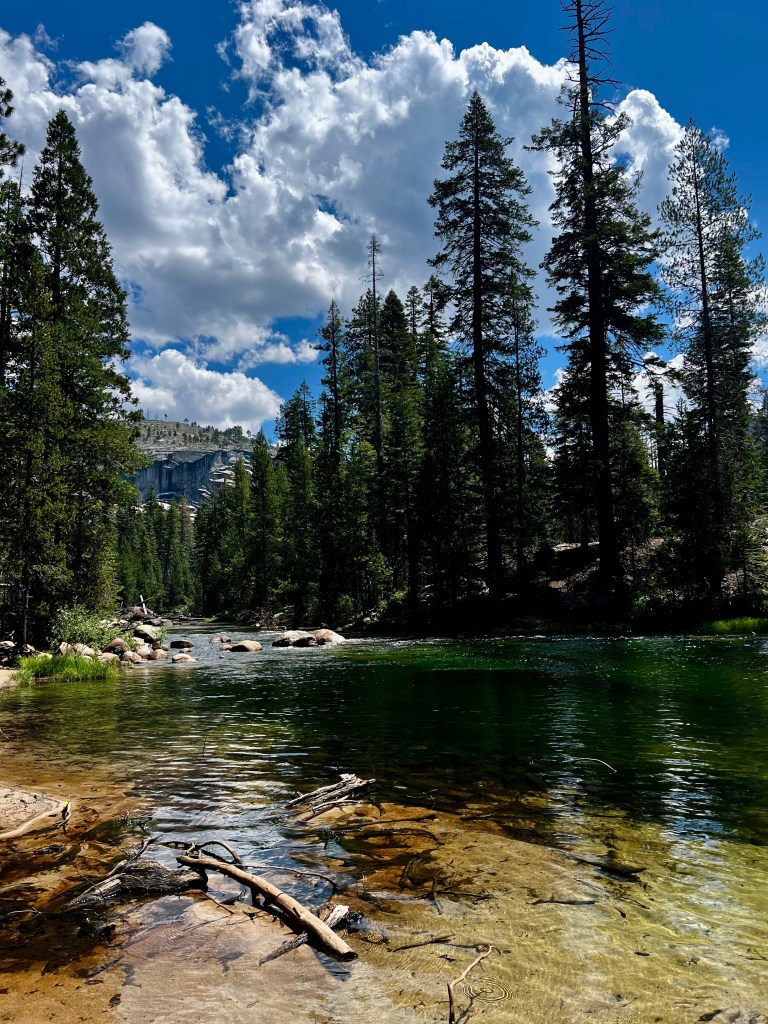
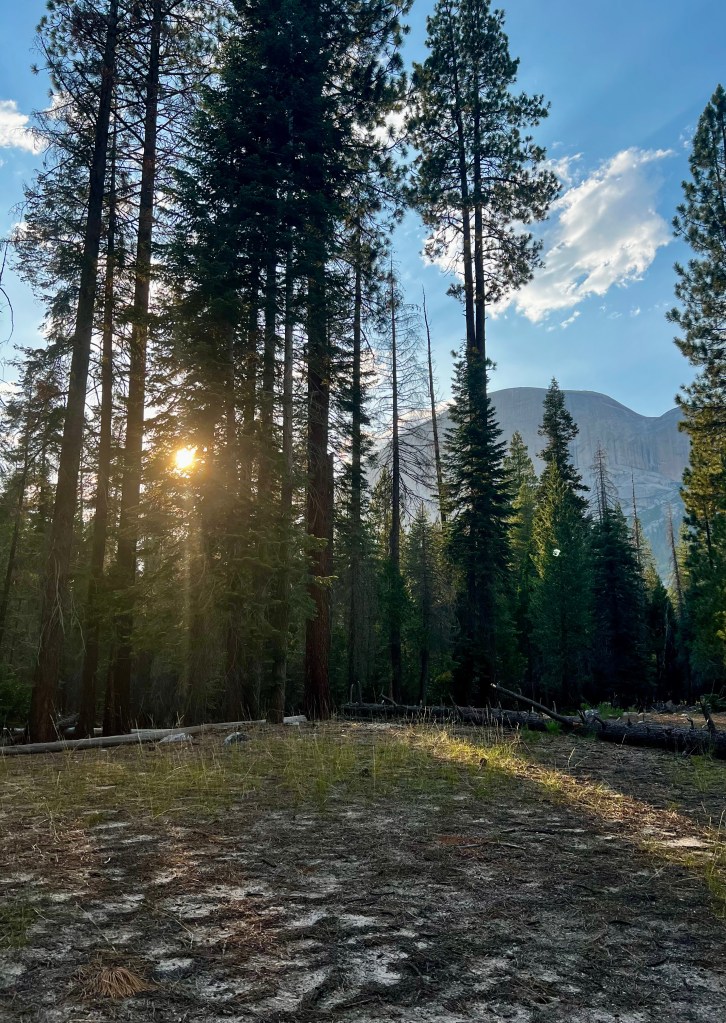
The next day, we hit the trail back down at 8:00 am. For the descent, we opted for the John Muir Trail, which was absolutely the right call. We had awesome views of the side of Half Dome and Nevada Fall most of the way. While this route is a bit longer, it’s less steep with minimal stairs compared to the Mist Trail—much easier on the knees.
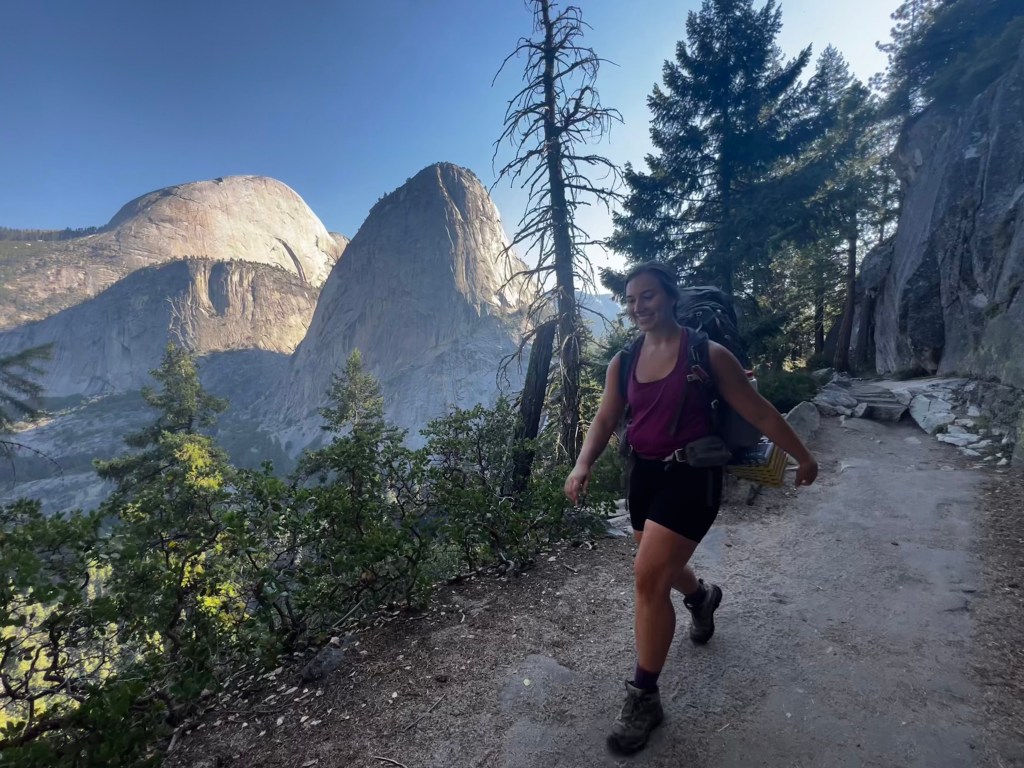
Half Dome is the kind of hike that sticks with you long after you leave Yosemite. It demands early mornings, patience with permits, and a healthy respect for both the terrain and the weather—but the payoff is unforgettable. From climbing the cables at sunrise to spending slow afternoons by the river in Little Yosemite Valley, the experience was equal parts challenging and deeply rewarding. It’s a hike that reminds you why preparation matters, why starting early is worth it, and why some adventures are best earned the hard way.
 wanderish life
Leave a comment